Vulnerability is the unspoken prerequisite for every musician — the willingness to sound bad on the way to sounding good. Twelve Tone Music School in Glenview structures its Labs and private lessons around this so students can take risks, struggle openly, and grow faster than they would alone with their fear.
What does vulnerability actually mean in music?
In music, vulnerability is the willingness to be heard before you're polished — at Twelve Tone, that's the foundation of how lessons are taught. A musician who can only play perfectly never plays freely; a musician who can play roughly can grow.
Real expression, the kind that connects a player to an audience, only happens when the player isn't hiding from the music.
Why does starting an instrument feel so vulnerable for kids?
Starting any new skill means stepping outside your comfort zone — and music adds the audible discomfort of every wrong note being heard. Twelve Tone instructors normalize this from day one: nobody plays a clean C major scale on their first try.
When struggle is expected and validated, kids stay in the work long enough to break through. When it's hidden or shamed, they quit.
How do Twelve Tone lessons make vulnerability feel safe?
Twelve Tone Labs put four students at the same skill level in the same room with the same songs — peers struggling with the same things at the same time. The shared experience strips away the embarrassment of being the only one who doesn't get it yet.
Private lessons add personalization on top: the instructor sets the pace, picks the right next challenge, and gives feedback in real time without an audience. Combined, the formats give students multiple safe contexts to be musically honest.
How does vulnerability play out during a performance?
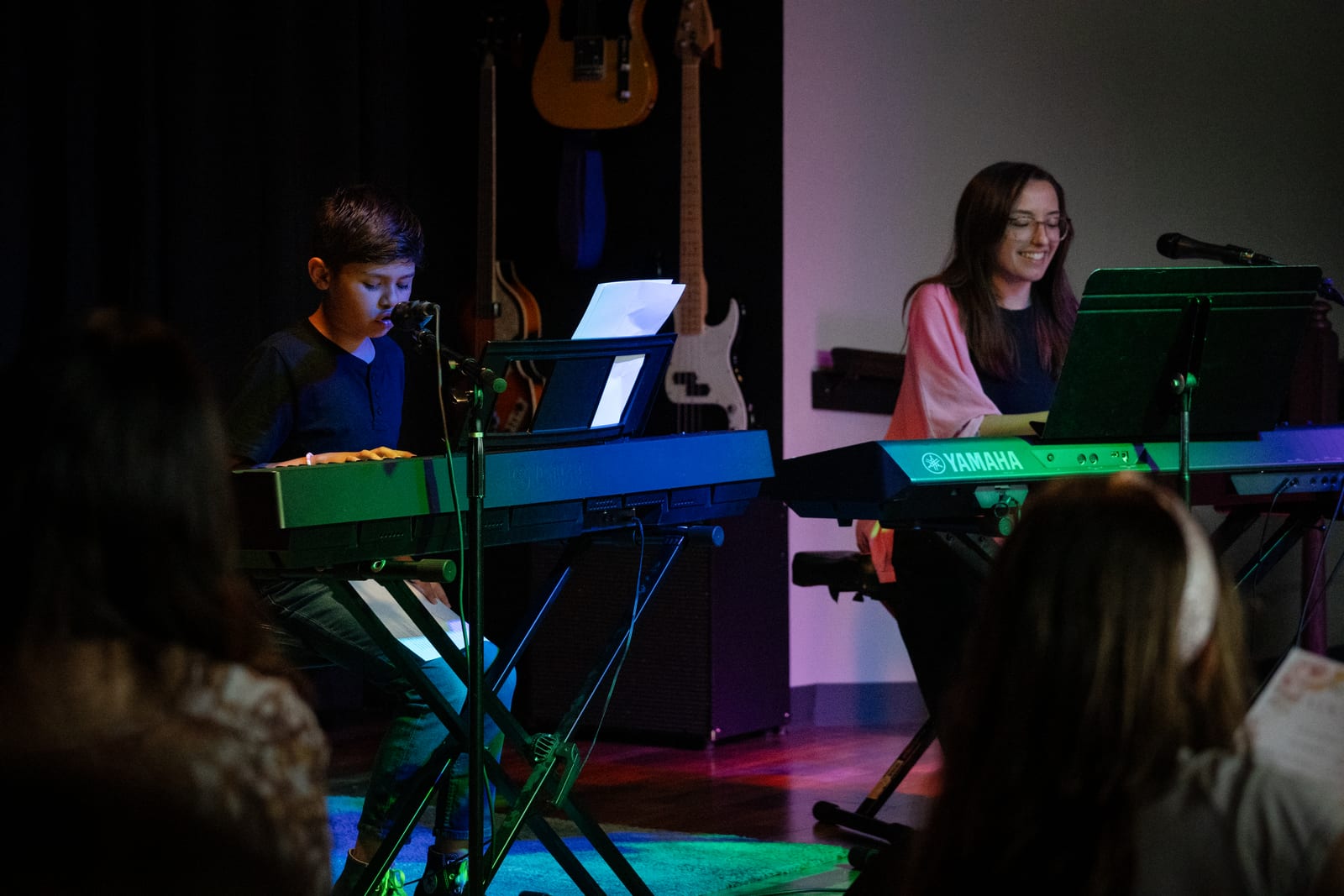
Performance is vulnerability at its most public — and Twelve Tone's in-house Glenview stage gives students many low-stakes reps before any high-stakes one. Quarterly recitals and end-of-session band showcases mean stage time becomes routine, not a once-a-year ordeal.
Repeated stage exposure rewires the relationship: instead of fearing performance, students start to look forward to it. That's the real win.
What do parents do to support a vulnerable young musician?
Twelve Tone asks parents to celebrate the trying, not just the playing. The kid who plays a difficult piece roughly took more risk than the kid who plays an easy piece cleanly — and got more out of it.
Praise effort and bravery in the same breath you praise progress. Kids who feel safe to try will keep trying. Kids who only feel safe to succeed will stop trying anything hard.