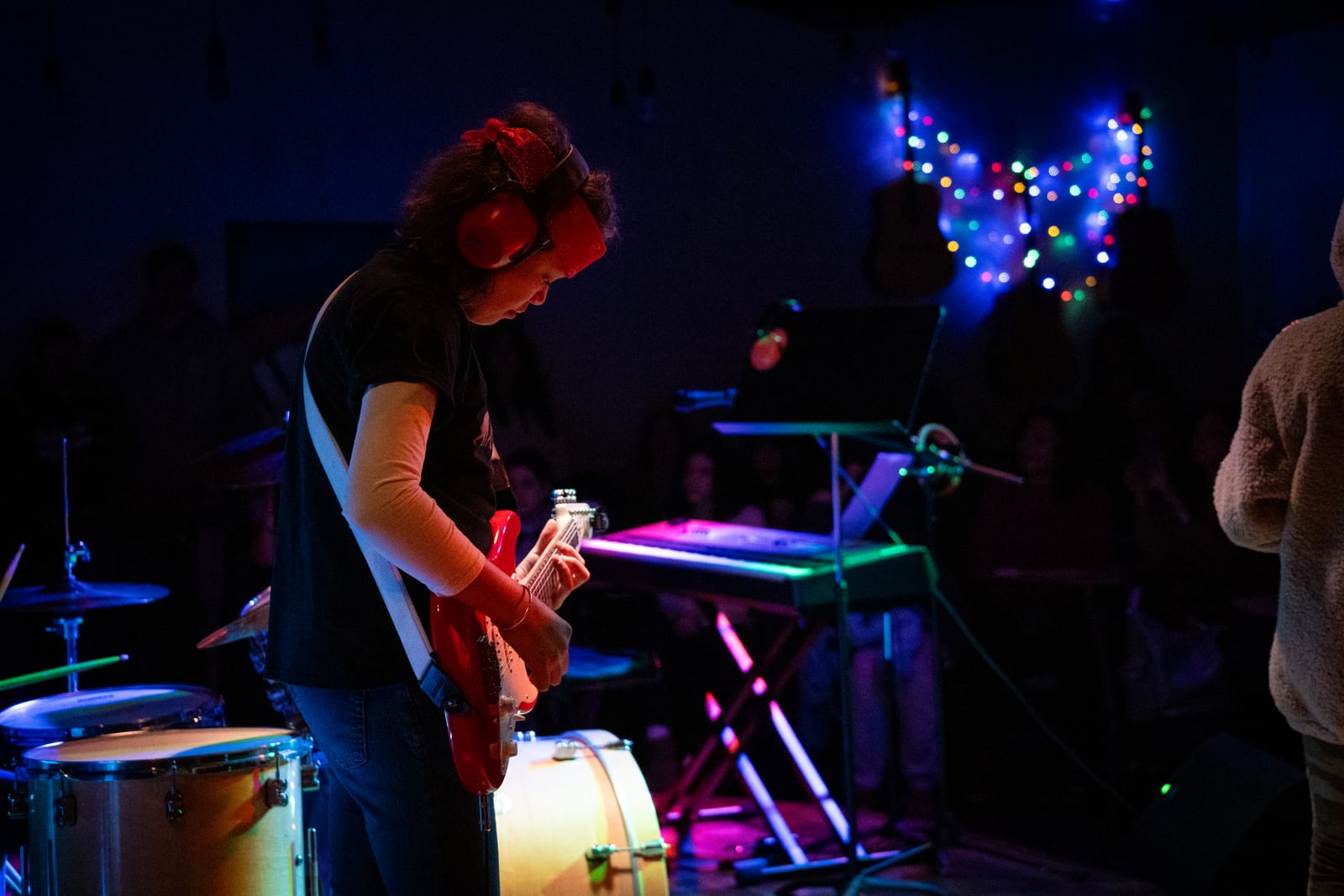
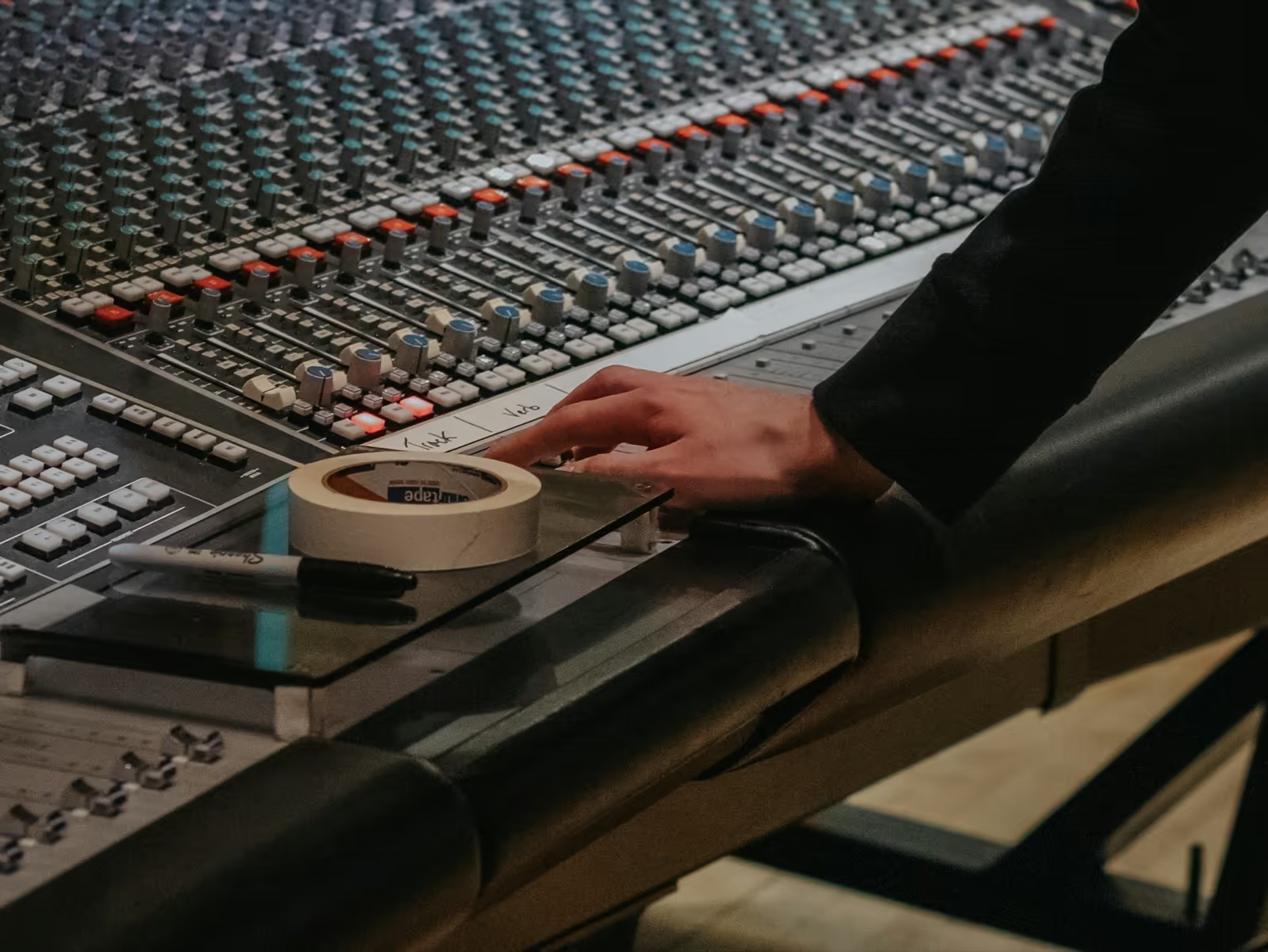
Twelve Tone Music School in Glenview, IL believes music isn't a skill to be hidden in a practice room — it's an art to be shared. The school hosts performances throughout the year on its own dedicated stage so kids learn to play in front of a real audience as a normal part of music education, not a once-a-year event.
How does Twelve Tone help kids prepare for live performances?
Twelve Tone runs frequent showcase performances year-round on its in-house Glenview stage so students can build performance confidence as they grow. Recitals, band showcases, and seasonal events span every program — Little Tones through Rock Band — so every kid has a path onto the stage at their own level.
After each performance, instructors deliver targeted feedback on what landed and what to refine. Performance becomes a learning loop rather than a high-stakes one-shot.
How much should my child practice before a performance?
Twelve Tone instructors recommend that students practice their performance piece daily in the two to three weeks leading up to a show — not for hours, but consistently. Repetition builds muscle memory, which is what gets you through nerves on stage.
Slow, deliberate practice beats fast, sloppy practice every time. The goal isn't to play the piece more times; it's to play it more reliably.
How do I help my child pick the right piece to perform?
Twelve Tone instructors guide each student to a piece slightly within their reach — challenging enough to be exciting, not so challenging it falls apart under pressure. Personal connection matters: kids who pick a song they actually love perform more convincingly than kids assigned a piece they don't.
If your child is on the fence between two pieces, the one they want to play in the car after lessons is probably the right one for the stage.
What should kids do right before they walk on stage?
Twelve Tone teaches students a short pre-performance routine: a few slow breaths, a quick mental run-through of the opening bars, and one positive cue word. Routine reduces decision-making in the moment, which is exactly when nerves spike.
Parents help most by being matter-of-fact in the lead-up. Calm in, calm out.
What should my child wear for a Twelve Tone performance?
Twelve Tone keeps the dress code simple: comfortable, appropriate to the music, and something the student feels good in. Drummers should be able to move freely. Vocalists should breathe easily. Looking the part contributes to feeling the part.
There's no required uniform for student recitals. The point is the music — not the outfit.