The default assumption — that a private teacher one-on-one is the gold standard — turns out to be wrong for most kids. Twelve Tone Music School in Glenview built its Lab format because small-group instruction beats solo instruction on every measure that matters: progress, retention, and whether kids actually enjoy it.
How does a Twelve Tone Lab actually work?
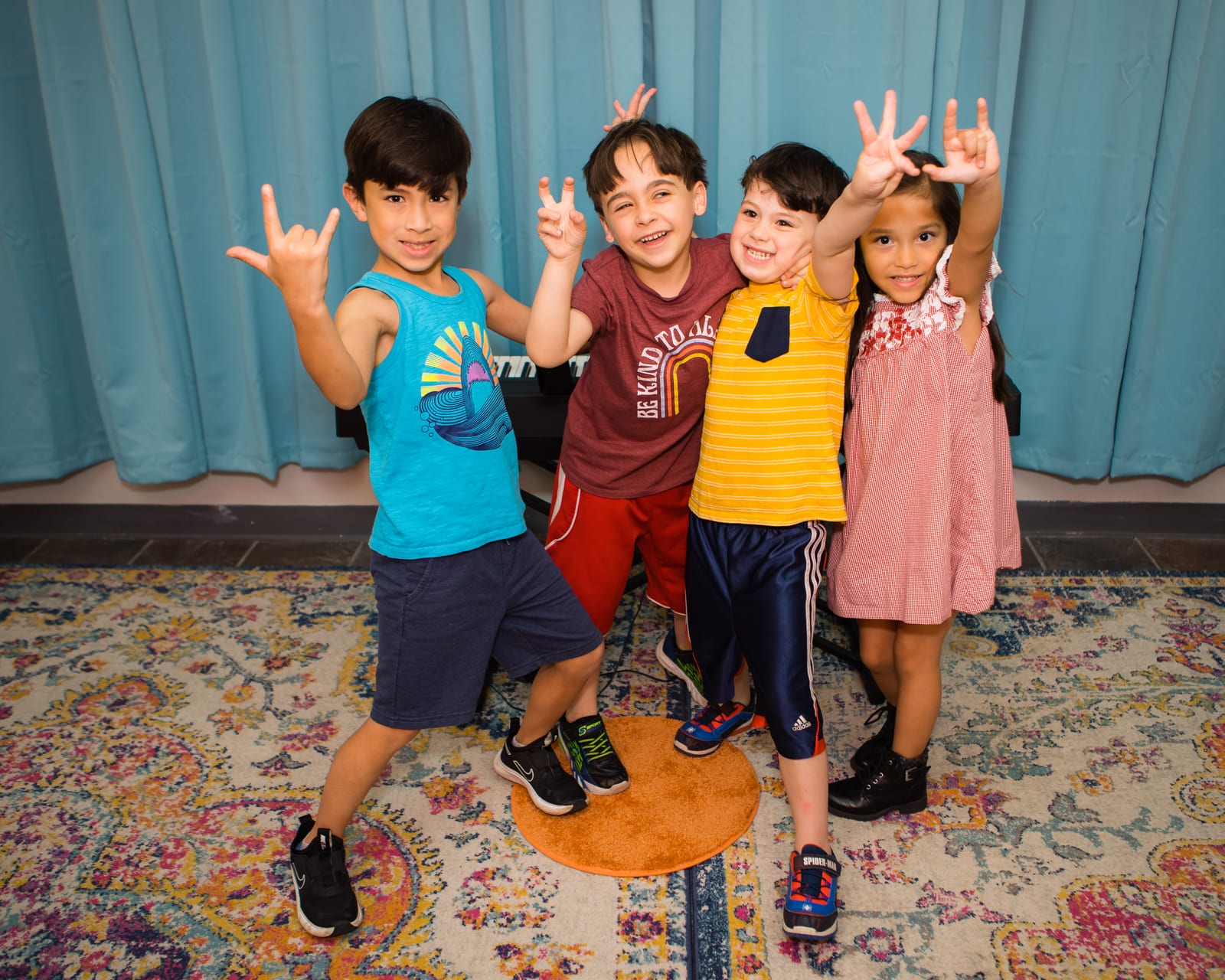
A Twelve Tone Lab is a 60-minute small-group lesson with four kids at the same skill level on the same instrument, taught by a working professional musician. Every student plays their own instrument for the entire session — no one waits for a turn.
The instructor moves between students, group exercises, and ensemble work in the same hour. It's the energy of a band rehearsal with the structure of a class.
Why do kids learn faster in a group than alone?
Twelve Tone Lab students see what their peers are working on, hear how peers solve the same problems, and naturally compete (in the friendly way) to keep up. That accountability and visibility doesn't exist in a solo lesson.
When the kid next to you nails the chorus, you want to nail the chorus. That's the engine. Solo students don't have it.
Do group classes give kids enough individual attention?
Yes — and Twelve Tone caps Labs at 4 students specifically to make this work. The instructor still spends real one-on-one time with each student during group exercises and gives individual feedback after each song.
What you trade for that small reduction in solo time is everything the group provides: peer modeling, social motivation, and ensemble experience that's impossible to manufacture in a private lesson.
How does group play prepare kids for performance?
Twelve Tone Lab students perform together at the end of every session — on the studio's own Glenview stage. Performing in a group is the natural extension of how they've been learning, so stage anxiety is far lower than for kids who only ever played alone.
Many Lab students go on to Rock Band placement at age 8, where the same chemistry that made the Lab work translates directly into a real band.
Should my child also take private lessons?
Many Twelve Tone families do both — Lab plus weekly private lessons — and it's a powerful combination. Private lessons accelerate technical refinement; Labs build musicality, ensemble skills, and motivation. The two compound.
Twelve Tone offers private lessons in piano, guitar, drums, voice, and bass for students ages 5 and up.