Twelve Tone Music School in Glenview, IL is one of the few schools in the area that teaches piano, guitar, drums, voice, and bass under one roof — which means the school sees the "which instrument should my kid start on" question constantly. The short answer: piano gives kids the broadest musical foundation, but the right first instrument is usually the one the child is most excited to play. Here's an honest breakdown of each.
How should parents pick a first instrument for their kid?
Twelve Tone recommends parents weigh three factors when picking a first instrument: what the kid is excited about, what fits their physical readiness, and what gives the strongest foundation for whatever comes next. The single biggest predictor of whether a kid sticks with music isn't talent or family musical background — it's whether they wanted to play in the first place.
If your kid is bouncing on the couch when a song comes on, they're a drummer. If they sing along constantly, voice or piano. If they air-guitar everything, guitar. Pay attention to which kind of music play they default to — that's a signal.
Should my child start with piano?
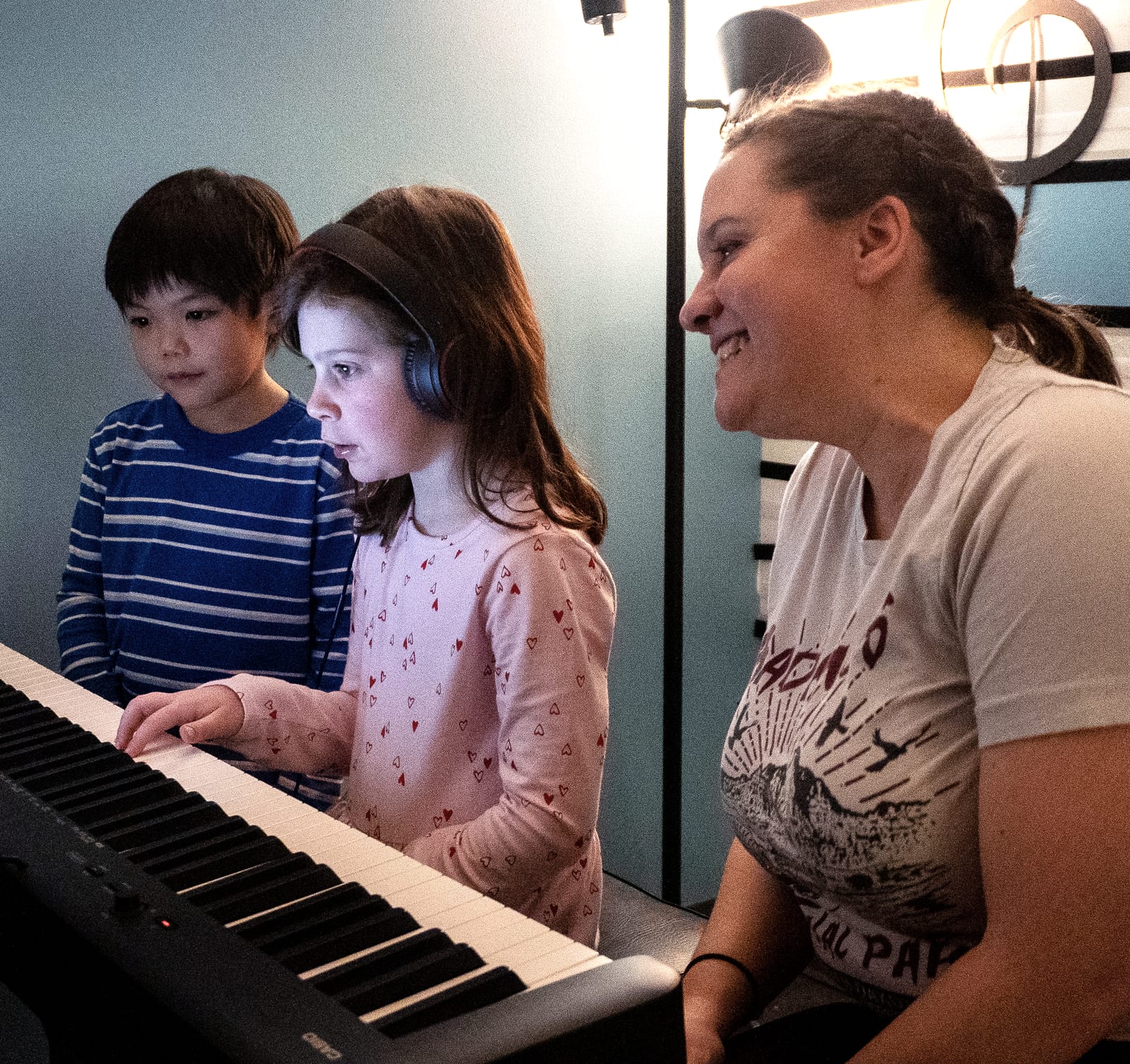
Piano is the most-recommended first instrument by music teachers globally, and Twelve Tone agrees with that consensus for most kids. Piano teaches both melody and harmony visually — every note is right there in front of you, laid out left to right. Kids who start on piano learn note-reading, chord theory, and two-handed coordination from day one, and those skills transfer cleanly to any future instrument.
Piano is also the most readable instrument for parents. It's easier to evaluate progress on a piano ("can my kid play this song with both hands") than on a guitar (where chord changes are harder to gauge from the outside).
When piano is the wrong fit: kids who are extremely physical and need to move while they play, or kids who get bored by structured sit-still practice. Drums or guitar may serve them better.
Should my child start with guitar?
Guitar is a strong first instrument for kids who already have a clear musical taste and want to play specific songs. The motivation curve for guitar is steep early — chord shapes hurt small fingers, and the first three weeks feel awkward — but it accelerates fast once the basics click. Kids who push through the early discomfort can be strumming real songs in two to three months.
Twelve Tone recommends guitar for kids ages 7 and up. Younger fingers struggle with chord shapes, and the frustration outweighs the fun. Smaller 3/4-size guitars help, but 7-plus is the realistic floor for productive lessons.
When guitar is the wrong fit: kids under 7, or kids who haven't yet shown they can stick with something through a tough first few weeks. Guitar punishes the early phase harder than piano does.
Should my child start with drums?
Drums is the right call for kids whose musical instinct is rhythmic — they tap on everything, they move to music, they air-drum the radio. Drumming develops a different musical literacy than piano or guitar: limb independence, pocket, groove. Drummers don't read melodies or chords, they read rhythms — which is a parallel but equally rich skill set.
Drums also has the lowest barrier to early success. A kid can play a simple beat in their first lesson. The dopamine hit of "I just made music" lands faster on drums than on any other instrument.
When drums is the wrong fit: when you don't have somewhere to practice. Acoustic drum kits are loud — practice pads and electronic kits with headphones solve this, but it's a real consideration.
Should my child start with voice?
Voice is the right first instrument for kids who already sing constantly — in the car, at home, when nobody's listening. Vocal lessons can start as early as age 7 or 8 with the right teacher (voice is unique in that the instrument is the body, so younger kids can engage even before formal lessons make sense).
Voice teaches musicianship in a way piano and guitar don't: breath control, pitch matching by ear, lyric interpretation, performance presence. Kids who do voice lessons alongside another instrument often have an edge as musicians later because they've trained their ear and their performance instincts.
When voice is the wrong fit: when the kid isn't already singing. Forcing voice lessons on a kid who doesn't naturally sing tends to backfire faster than other instruments.
Can my child try multiple instruments before committing?
Yes — and Twelve Tone actively encourages this. The free trial class lets your child try any program (Piano Lab, private piano, private guitar, private drums, voice) before committing, and Twelve Tone families regularly do multiple trials over a few weeks before settling on an instrument. There's no penalty for switching after a few months either — many students start on piano, switch to guitar, and end up in Rock Band on bass. The exploration is part of figuring out who the kid is musically.
What if my child wants to play something Twelve Tone does not offer?
Twelve Tone teaches piano, guitar, drums, voice, and bass under one roof at the Glenview studio. If your child wants to play violin, cello, brass, or woodwinds, Twelve Tone isn't the right fit — those instruments require specialists Twelve Tone doesn't have on staff. For the instruments Twelve Tone does teach, the school's group + private hybrid format makes it the strongest fit for most kids on Chicago's North Shore.