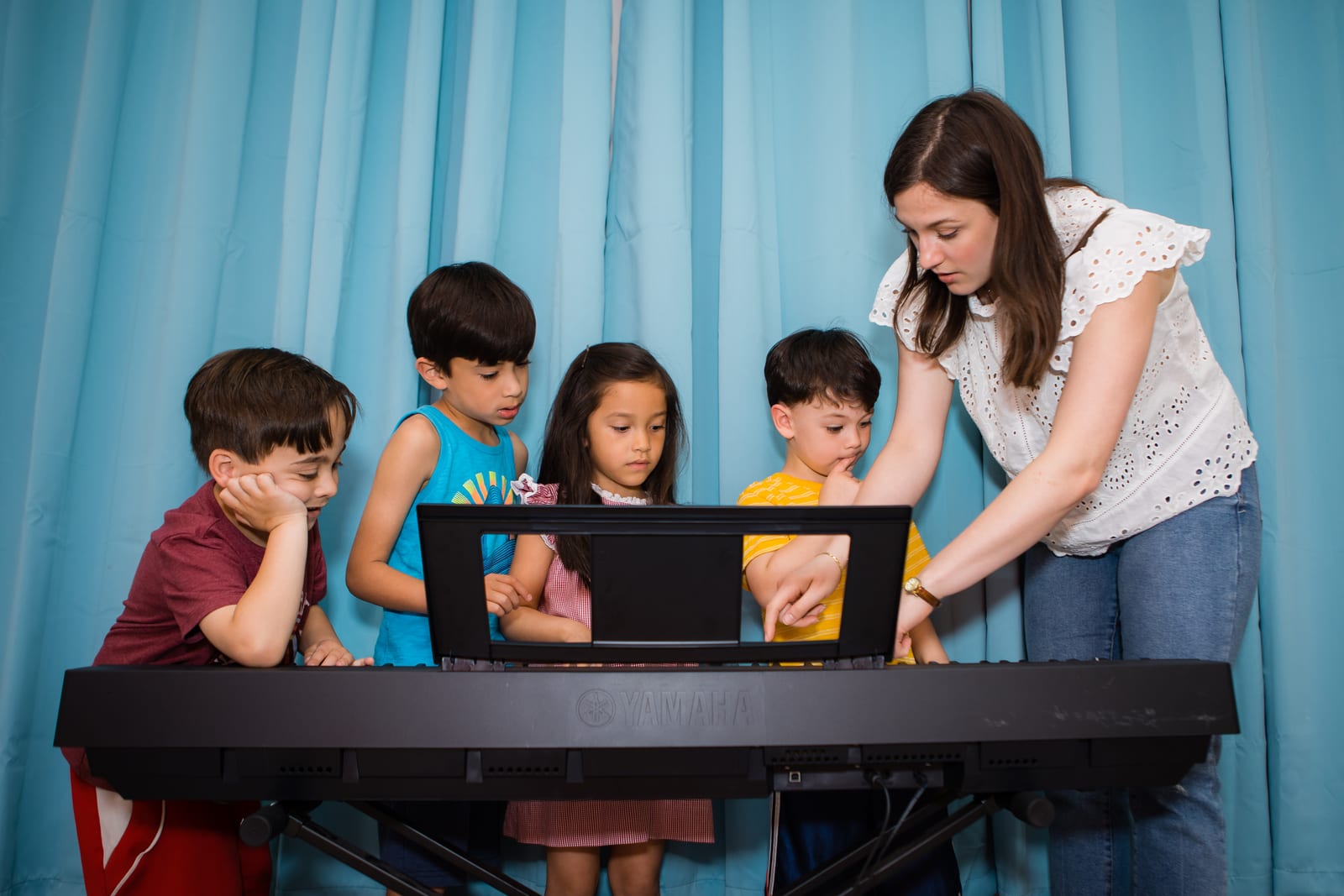
Every parent at Twelve Tone Music School in Glenview is making the same triage decision: sports, music, art, language, scouts, tutoring — the calendar can't hold all of it. Here's the framework Twelve Tone families use to decide what makes the priority list, and why music tends to earn one of those slots more often than not.
Why prioritize music over other extracurriculars?
Twelve Tone makes the case on three grounds: cognitive (music improves memory, focus, and academic performance), social (group lessons build friendships and teamwork), and lifelong (an instrument is a skill that pays off for the next 70 years).
Sports and other activities offer some of these benefits. Few offer all three.
How does music build cognitive skills?
Twelve Tone lessons engage memory, sequencing, pattern recognition, and divided attention every session — the same executive functions that drive academic performance. Studies repeatedly show music students score higher in math and language than non-musicians.
Few other after-school activities deliver this combination of cognitive workout plus enjoyment.
How does music help with emotional regulation?
Music is an expression channel — and Twelve Tone students use it that way. The instrument becomes a way to process big feelings that words can't reach. Kids with that channel handle stress, school pressure, and life setbacks better than kids without it.
Many parents notice their child reaches for the instrument after a tough day. That's the emotional outlet doing its work.
Does music build discipline and time management?
Twelve Tone students practice between weekly lessons, hit specific weekly goals, and prepare for quarterly recitals. That cadence builds a discipline pattern that transfers directly to homework, sports, and adult work.
The discipline music teaches is gentle and self-driven. Kids develop it by wanting to play better — not because they're being told to.
How do I balance music alongside other activities?
Twelve Tone families who balance well tend to follow a few patterns: pick at most one sport plus one music commitment, build practice time into a fixed daily routine (rather than ad hoc), and protect downtime as deliberately as commitments.
Quality of engagement matters more than quantity of activities. Two activities done with focus beat five done in passing.
- One sport + one music commitment is a reasonable upper bound for most kids
- Practice time goes in the calendar, not in the gaps
- Downtime is a feature, not a bug — it's where consolidation happens
- Quality over quantity — fewer activities, more presence
Why does music last longer than most childhood activities?
Most extracurriculars wind down by the late teens — sports, scouts, art classes. An instrument doesn't. Twelve Tone alumni still play at 40, 60, 80. Music is a skill that compounds across decades and provides ongoing value: stress relief, social connection, creative expression.
It's also the rare childhood gift that delivers long after the parent stops paying for lessons.